Draw the Smallest Possible Binary Tree
Find Minimum Depth of a Binary Tree
Given a binary tree, find its minimum depth. The minimum depth is the number of nodes along the shortest path from the root node down to the nearest leaf node.
For example, minimum height of below Binary Tree is 2.
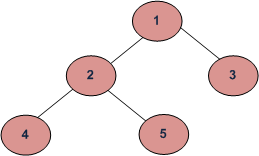
Note that the path must end on a leaf node. For example, the minimum height of below Binary Tree is also 2.
10 / 5
The idea is to traverse the given Binary Tree. For every node, check if it is a leaf node. If yes, then return 1. If not leaf node then if the left subtree is NULL, then recur for the right subtree. And if the right subtree is NULL, then recur for the left subtree. If both left and right subtrees are not NULL, then take the minimum of two heights.
Below is implementation of the above idea.
C++
#include<bits/stdc++.h>
using namespace std;
struct Node
{
int data;
struct Node* left, *right;
};
int minDepth(Node *root)
{
if (root == NULL)
return 0;
if (root->left == NULL && root->right == NULL)
return 1;
int l = INT_MAX, r = INT_MAX;
if (root->left)
l = minDepth(root->left);
if (root->right)
r = minDepth(root->right);
return min(l , r) + 1;
}
Node *newNode( int data)
{
Node *temp = new Node;
temp->data = data;
temp->left = temp->right = NULL;
return (temp);
}
int main()
{
Node *root = newNode(1);
root->left = newNode(2);
root->right = newNode(3);
root->left->left = newNode(4);
root->left->right = newNode(5);
cout << "The minimum depth of binary tree is : " << minDepth(root);
return 0;
}
C
#include <limits.h>
#include <stdio.h>
#include <stdlib.h>
typedef struct Node {
int data;
struct Node *left, *right;
} Node;
int min( int num1, int num2)
{
return (num1 > num2) ? num2 : num1;
}
int minDepth(Node* root)
{
if (root == NULL)
return 0;
if (root->left == NULL && root->right == NULL)
return 1;
int l = INT_MAX;
int r = INT_MIN;
if (root->left)
l = minDepth(root->left);
if (root->right)
r = minDepth(root->right);
return min(l, r) + 1;
}
Node* newNode( int data)
{
Node* temp = (Node*) malloc ( sizeof (Node));
temp->data = data;
temp->left = temp->right = NULL;
return (temp);
}
int main()
{
Node* root = newNode(1);
root->left = newNode(2);
root->right = newNode(3);
root->left->left = newNode(4);
root->left->right = newNode(5);
printf ( "The minimum depth of binary tree is : %d" ,
minDepth(root));
return 0;
}
Java
class Node
{
int data;
Node left, right;
public Node( int item)
{
data = item;
left = right = null ;
}
}
public class BinaryTree
{
Node root;
int minimumDepth()
{
return minimumDepth(root);
}
int minimumDepth(Node root)
{
if (root == null )
return 0 ;
if (root.left == null && root.right == null )
return 1 ;
if (root.left == null )
return minimumDepth(root.right) + 1 ;
if (root.right == null )
return minimumDepth(root.left) + 1 ;
return Math.min(minimumDepth(root.left),
minimumDepth(root.right)) + 1 ;
}
public static void main(String args[])
{
BinaryTree tree = new BinaryTree();
tree.root = new Node( 1 );
tree.root.left = new Node( 2 );
tree.root.right = new Node( 3 );
tree.root.left.left = new Node( 4 );
tree.root.left.right = new Node( 5 );
System.out.println( "The minimum depth of " +
"binary tree is : " + tree.minimumDepth());
}
}
Python3
class Node:
def __init__( self , key):
self .data = key
self .left = None
self .right = None
def minDepth(root):
if root is None :
return 0
if root.left is None and root.right is None :
return 1
if root.left is None :
return minDepth(root.right) + 1
if root.right is None :
return minDepth(root.left) + 1
return min (minDepth(root.left), minDepth(root.right)) + 1
root = Node( 1 )
root.left = Node( 2 )
root.right = Node( 3 )
root.left.left = Node( 4 )
root.left.right = Node( 5 )
print (minDepth(root))
C#
using System;
public class Node
{
public int data;
public Node left, right;
public Node( int item)
{
data = item;
left = right = null ;
}
}
public class BinaryTree
{
public Node root;
public virtual int minimumDepth()
{
return minimumDepth(root);
}
public virtual int minimumDepth(Node root)
{
if (root == null )
{
return 0;
}
if (root.left == null && root.right == null )
{
return 1;
}
if (root.left == null )
{
return minimumDepth(root.right) + 1;
}
if (root.right == null )
{
return minimumDepth(root.left) + 1;
}
return Math.Min(minimumDepth(root.left), minimumDepth(root.right)) + 1;
}
public static void Main( string [] args)
{
BinaryTree tree = new BinaryTree();
tree.root = new Node(1);
tree.root.left = new Node(2);
tree.root.right = new Node(3);
tree.root.left.left = new Node(4);
tree.root.left.right = new Node(5);
Console.WriteLine( "The minimum depth of binary tree is : " + tree.minimumDepth());
}
}
Javascript
<script>
class Node {
constructor(item) {
this .data = item;
this .left = this .right = null ;
}
}
let root;
function minimumDepth() {
return minimumDepth(root);
}
function minimumDepth( root) {
if (root == null )
return 0;
if (root.left == null && root.right == null )
return 1;
if (root.left == null )
return minimumDepth(root.right) + 1;
if (root.right == null )
return minimumDepth(root.left) + 1;
return Math.min(minimumDepth(root.left), minimumDepth(root.right)) + 1;
}
root = new Node(1);
root.left = new Node(2);
root.right = new Node(3);
root.left.left = new Node(4);
root.left.right = new Node(5);
document.write( "The minimum depth of "
+ "binary tree is : " + minimumDepth(root));
</script>
Output:
The minimum depth of binary tree is : 2
Time complexity of above solution is O(n) as it traverses the tree only once.
Thanks to Gaurav Ahirwar for providing above solution.
The above method may end up with complete traversal of Binary Tree even when the topmost leaf is close to root. A Better Solution is to do Level Order Traversal. While doing traversal, returns depth of the first encountered leaf node.
Below is implementation of this solution.
C++
#include<bits/stdc++.h>
using namespace std;
struct Node
{
int data;
struct Node *left, *right;
};
struct qItem
{
Node *node;
int depth;
};
int minDepth(Node *root)
{
if (root == NULL)
return 0;
queue<qItem> q;
qItem qi = {root, 1};
q.push(qi);
while (q.empty() == false )
{
qi = q.front();
q.pop();
Node *node = qi.node;
int depth = qi.depth;
if (node->left == NULL && node->right == NULL)
return depth;
if (node->left != NULL)
{
qi.node = node->left;
qi.depth = depth + 1;
q.push(qi);
}
if (node->right != NULL)
{
qi.node = node->right;
qi.depth = depth+1;
q.push(qi);
}
}
return 0;
}
Node* newNode( int data)
{
Node *temp = new Node;
temp->data = data;
temp->left = temp->right = NULL;
return temp;
}
int main()
{
Node *root = newNode(1);
root->left = newNode(2);
root->right = newNode(3);
root->left->left = newNode(4);
root->left->right = newNode(5);
cout << minDepth(root);
return 0;
}
Java
import java.util.*;
class GFG
{
static class Node
{
int data;
Node left, right;
}
static class qItem
{
Node node;
int depth;
public qItem(Node node, int depth)
{
this .node = node;
this .depth = depth;
}
}
static int minDepth(Node root)
{
if (root == null )
return 0 ;
Queue<qItem> q = new LinkedList<>();
qItem qi = new qItem(root, 1 );
q.add(qi);
while (q.isEmpty() == false )
{
qi = q.peek();
q.remove();
Node node = qi.node;
int depth = qi.depth;
if (node.left == null && node.right == null )
return depth;
if (node.left != null )
{
qi.node = node.left;
qi.depth = depth + 1 ;
q.add(qi);
}
if (node.right != null )
{
qi.node = node.right;
qi.depth = depth + 1 ;
q.add(qi);
}
}
return 0 ;
}
static Node newNode( int data)
{
Node temp = new Node();
temp.data = data;
temp.left = temp.right = null ;
return temp;
}
public static void main(String[] args)
{
Node root = newNode( 1 );
root.left = newNode( 2 );
root.right = newNode( 3 );
root.left.left = newNode( 4 );
root.left.right = newNode( 5 );
System.out.println(minDepth(root));
}
}
Python3
class Node:
def __init__( self , data):
self .data = data
self .left = None
self .right = None
def minDepth(root):
if root is None :
return 0
q = []
q.append({ 'node' : root , 'depth' : 1 })
while ( len (q)> 0 ):
queueItem = q.pop( 0 )
node = queueItem[ 'node' ]
depth = queueItem[ 'depth' ]
if node.left is None and node.right is None :
return depth
if node.left is not None :
q.append({ 'node' : node.left , 'depth' : depth + 1 })
if node.right is not None :
q.append({ 'node' : node.right , 'depth' : depth + 1 })
root = Node( 1 )
root.left = Node( 2 )
root.right = Node( 3 )
root.left.left = Node( 4 )
root.left.right = Node( 5 )
print (minDepth(root))
C#
using System;
using System.Collections.Generic;
class GFG
{
public class Node
{
public int data;
public Node left, right;
}
public class qItem
{
public Node node;
public int depth;
public qItem(Node node, int depth)
{
this .node = node;
this .depth = depth;
}
}
static int minDepth(Node root)
{
if (root == null )
return 0;
Queue<qItem> q = new Queue<qItem>();
qItem qi = new qItem(root, 1);
q.Enqueue(qi);
while (q.Count != 0)
{
qi = q.Peek();
q.Dequeue();
Node node = qi.node;
int depth = qi.depth;
if (node.left == null &&
node.right == null )
return depth;
if (node.left != null )
{
qi.node = node.left;
qi.depth = depth + 1;
q.Enqueue(qi);
}
if (node.right != null )
{
qi.node = node.right;
qi.depth = depth + 1;
q.Enqueue(qi);
}
}
return 0;
}
static Node newNode( int data)
{
Node temp = new Node();
temp.data = data;
temp.left = temp.right = null ;
return temp;
}
public static void Main(String[] args)
{
Node root = newNode(1);
root.left = newNode(2);
root.right = newNode(3);
root.left.left = newNode(4);
root.left.right = newNode(5);
Console.WriteLine(minDepth(root));
}
}
Javascript
<script>
class Node
{
constructor(data)
{
this .data = data;
this .left = this .right = null ;
}
}
class qItem
{
constructor(node,depth)
{
this .node = node;
this .depth = depth;
}
}
function minDepth(root)
{
if (root == null )
return 0;
let q = [];
let qi = new qItem(root, 1);
q.push(qi);
while (q.length != 0)
{
qi = q.shift();
let node = qi.node;
let depth = qi.depth;
if (node.left == null && node.right == null )
return depth;
if (node.left != null )
{
qi.node = node.left;
qi.depth = depth + 1;
q.push(qi);
}
if (node.right != null )
{
qi.node = node.right;
qi.depth = depth + 1;
q.push(qi);
}
}
return 0;
}
let root = new Node(1);
root.left = new Node(2);
root.right = new Node(3);
root.left.left = new Node(4);
root.left.right = new Node(5);
document.write(minDepth(root));
</script>
Output:
2
Another approach:
C++
#include <iostream>
#include<math.h>
using namespace std;
struct Node
{
int data;
struct Node *left;
struct Node *right;
Node( int k){
data = k;
left = right = NULL;
}
};
int minimumDepth(Node *root, int level)
{
if (root == NULL)
return level;
level++;
return min(minimumDepth(root->left, level),
minimumDepth(root->right, level));
}
int main()
{
Node *root = new Node(1);
root->left = new Node(2);
root->right = new Node(3);
root->left->left = new Node(4);
root->left->right = new Node(5);
cout << minimumDepth(root, 0);
return 0;
}
Java
class Node {
int data;
Node left, right;
public Node( int item)
{
data = item;
left = right = null ;
}
}
public class MinimumTreeHeight {
Node root;
int minimumDepth() { return minimumDepth(root, 0 ); }
int minimumDepth(Node root, int level)
{
if (root == null )
return level;
level++;
return Math.min(minimumDepth(root.left, level),
minimumDepth(root.right, level));
}
public static void main(String args[])
{
MinimumTreeHeight tree = new MinimumTreeHeight();
tree.root = new Node( 1 );
tree.root.left = new Node( 2 );
tree.root.right = new Node( 3 );
tree.root.left.left = new Node( 4 );
tree.root.left.right = new Node( 5 );
System.out.println( "The minimum depth of "
+ "binary tree is : "
+ tree.minimumDepth());
}
}
Python3
class Node:
def __init__( self , d):
self .data = d
self .left = None
self .right = None
def minimumDepth(root, level):
if (root = = None ):
return level;
level + = 1 ;
return min (minimumDepth(root.left, level),
minimumDepth(root.right, level))
root = Node( 1 )
root.left = Node( 2 )
root.right = Node( 3 )
root.left.left = Node( 4 )
root.left.right = Node( 5 )
print ( "The minimum depth of " , "binary tree is : " , minimumDepth(root, 0 ))
C#
using System;
public class Node {
public int data;
public Node left, right;
public Node( int item)
{
data = item;
left = right = null ;
}
}
public class MinimumTreeHeight {
Node root;
int minimumDepth() { return minimumDepth(root, 0); }
int minimumDepth(Node root, int level)
{
if (root == null )
return level;
level++;
return Math.Min(minimumDepth(root.left, level),
minimumDepth(root.right, level));
}
public static void Main(String[] args)
{
MinimumTreeHeight tree = new MinimumTreeHeight();
tree.root = new Node(1);
tree.root.left = new Node(2);
tree.root.right = new Node(3);
tree.root.left.left = new Node(4);
tree.root.left.right = new Node(5);
Console.WriteLine( "The minimum depth of "
+ "binary tree is : "
+ tree.minimumDepth());
}
}
Javascript
<script>
class Node
{
constructor(item)
{
this .data=item;
this .left= this .right= null ;
}
}
let root;
function minimumDepths()
{
return minimumDepth(root, 0);
}
function minimumDepth(root,level)
{
if (root == null )
return level;
level++;
return Math.min(minimumDepth(root.left, level),
minimumDepth(root.right, level));
}
root = new Node(1);
root.left = new Node(2);
root.right = new Node(3);
root.left.left = new Node(4);
root.left.right = new Node(5);
document.write( "The minimum depth of "
+ "binary tree is : "
+ minimumDepths());
</script>
Output:
The minimum depth of binary tree is : 2
Thanks to Manish Chauhan for suggesting above idea and Ravi for providing implementation.
Please write comments if you find anything incorrect, or you want to share more information about the topic discussed above
norrisbusiouty1960.blogspot.com
Source: https://www.geeksforgeeks.org/find-minimum-depth-of-a-binary-tree/
0 Response to "Draw the Smallest Possible Binary Tree"
Postar um comentário